
UNDERSTAND YOUR SKIN
Enlarged Pores
What are enlarged pores?
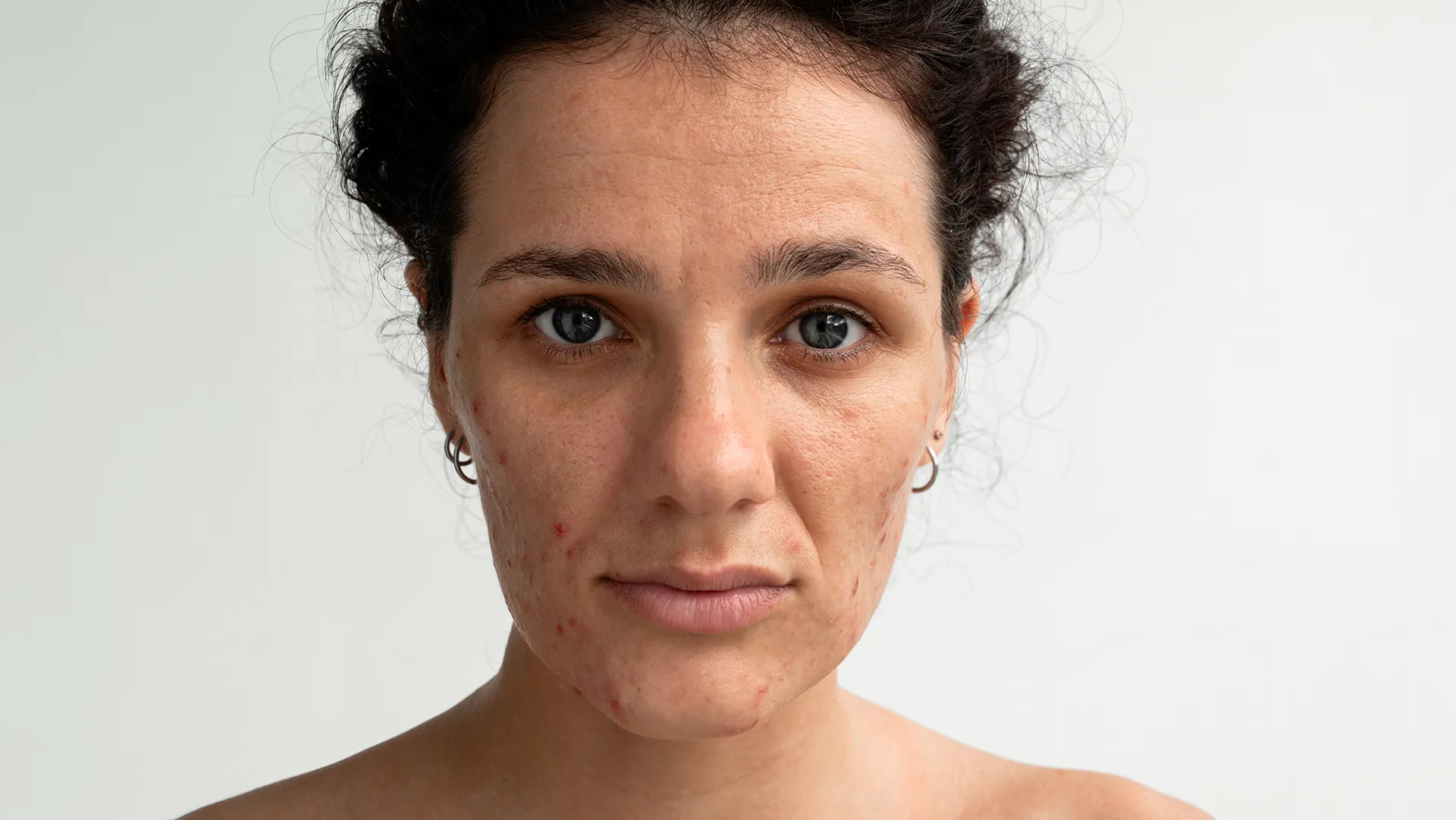
Enlarged pores are visible openings that give the skin a dotted or slightly uneven appearance. They are often most noticeable on the nose, inner cheeks, forehead and chin. Pores are a normal part of skin: the openings associated with hair follicles allow natural oil to reach the surface.
Having visible pores does not mean your face is dirty or unhealthy. Their appearance varies between people and across different areas of the same face. Close-up photographs, strong side lighting and magnifying mirrors can make ordinary skin detail look more prominent.
The aim of treatment is to make enlarged pores less noticeable while keeping the skin comfortable. No responsible treatment plan should promise permanently poreless skin. At Skin Line, the starting point is to understand whether oiliness, blocked follicles or changes in the surrounding skin are contributing to your concern.
Main signs and symptoms
You may see small round or oval openings, particularly across the centre of the face. Some contain a darker plug, while others simply create a shadow. Shine can make them more apparent, and make-up may emphasise rather than conceal the surface detail.
Enlarged pores themselves are usually painless. Tender spots, persistent redness or itching suggest that another issue may also be present. Small, fairly uniform grey or yellowish dots on the nose may be sebaceous filaments: normal structures that help oil travel through the follicle. They are not the same as blackheads, as Cleveland Clinic explains.
Types and similar-looking concerns
There is no single everyday classification that determines treatment. It is more helpful to identify the main pattern:
- Visible pores with oily skin: openings are prominent alongside shine.
- Congested pores: blackheads or other acne lesions occur in the same area.
- Pores with reduced skin firmness: changes in supporting tissue make openings more noticeable.
- Scar-like depressions: small pits may actually be Acne Scars and need a different assessment.
These patterns can overlap. Avoid choosing a strong treatment solely from a photograph or an online pore-size chart.
Why do pores become more noticeable?
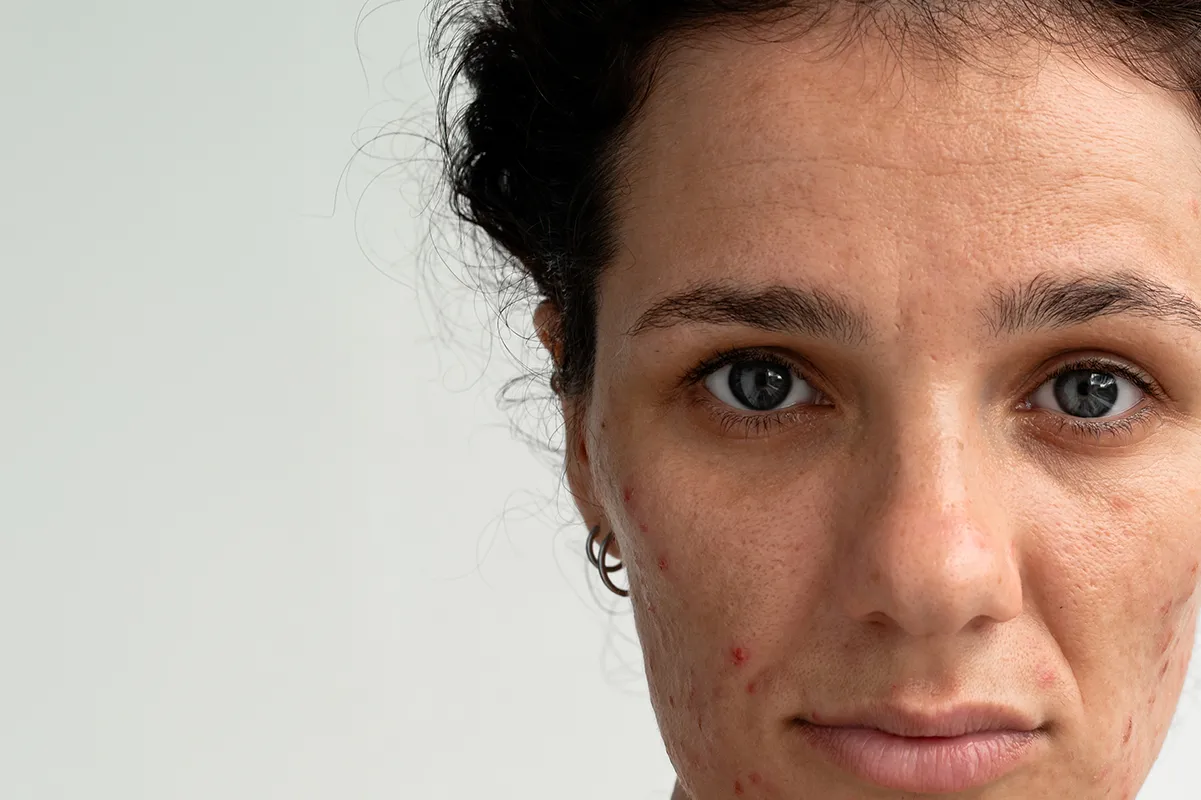
Several processes can contribute. Greater oil production, the size of the hair follicle and reduced elasticity around the opening all influence how a pore looks. This is why an approach that helps an oily teenager may not suit someone whose main concern is age-related texture. A review of facial pores and treatment options describes these different contributing factors.
Blocking a follicle with oil and dead skin cells can also produce a blackhead. Its dark colour does not mean trapped dirt. Acne can therefore make the same area look both bumpy and porous; the NHS explains how acne develops.
Causes and risk factors
Your natural skin characteristics influence what is normal for you. Increased oiliness, acne, products that block pores, accumulated sun exposure and loss of elasticity with age may all contribute. Pores are visible across different ages and skin tones. DermNet outlines the recognised contributors.
Harsh cleansing is not a reliable solution to an oily appearance. Irritation may make the surface look worse. Describe any recent change in products or treatments during your consultation, rather than assuming every visible opening has the same cause.
Are enlarged pores a medical condition?
Visible pores are usually a cosmetic concern rather than a disease. They do not need treatment simply because they can be seen. A wish for smoother-looking skin is valid, but the benefits of any procedure should be proportionate to its risks, cost and recovery.
Assessment matters when pores occur alongside acne, scarring or an unexplained skin change. Your clinician can examine the area and ask about oiliness, sensitivity, previous treatments and the results you want. Tell them about medicines, pregnancy or breastfeeding, and any history of poor healing or pigment changes.
It can help to bring your current skincare products or a list of their ingredients. Agree on a specific goal, such as fewer blocked pores or less noticeable cheek texture. Comparing like-for-like photographs over time is more useful than expecting your skin to match a filtered image.
Everyday care for enlarged pores
Use a gentle cleanser and lukewarm water, usually morning and evening. Choose skincare and make-up labelled non-comedogenic, meaning designed not to block pores. Avoid scrubbing or squeezing. Daily broad-spectrum SPF 30 or higher helps limit further sun damage. These measures feature in the AAD’s advice for large facial pores.
A suitable moisturiser still has a place in an oily-skin routine. Remove make-up before bed and introduce new products gradually, so you can identify irritation. Consistency is more useful than repeatedly changing everything after a few days.
If blocked pores are a problem, ask whether a salicylic acid product or retinoid is appropriate. Both can irritate sensitive skin. Retinol products should be avoided during pregnancy and breastfeeding; discuss suitable alternatives with your clinician. Do not layer several strong exfoliating products in an attempt to accelerate results.
Popular home remedies: what can they achieve?
Clay masks, homemade scrubs and peel-off products are often promoted as a quick way to clear pores. A mask may temporarily reduce surface oil or change how the skin feels, but that is different from a lasting change in pore appearance. Masks do not replace treatment for acne or other skin problems; see the AAD’s guidance on facial masks.
Kitchen mixtures containing lemon juice or abrasive grains can irritate the skin. Natural ingredients are not automatically gentle, and a strong tingling sensation is not evidence of better results. Stop using a product if it causes burning or a rash.
Repeatedly squeezing normal sebaceous filaments is also unhelpful: oil can build up again, while pressure damages the surrounding skin. Avoid home needling, strong acid peels and tools that injure the surface. For a straightforward routine, a gentle cleanser, moisturiser and sun protection are a more sensible starting point than an elaborate home recipe.
When should you see a doctor?
Arrange an assessment if you have painful breakouts, developing scars or persistent irritation, or if your routine is not helping. Acne that affects your confidence also deserves attention; you do not have to wait for it to become severe.
A single changing, bleeding or non-healing spot should not be dismissed as an enlarged pore. Have it checked before applying acids or booking a cosmetic procedure. The NHS describes skin changes that need medical advice. A consultation should separate a harmless cosmetic concern from something requiring diagnosis.
Modern treatment options
Treatment should address the main contributor rather than pore size alone. Where acne is present, a clinician may recommend appropriate topical treatment first. Selected peels, laser procedures or radiofrequency microneedling may be considered for suitable patients, but improvement varies and pores remain part of the skin.
Morpheus8 at Skin Line
Morpheus8 combines microneedling with radiofrequency. It may be considered when enlarged pores form part of a broader texture concern, after assessment of your skin and expectations. It is not necessary for every person with visible pores, and it does not guarantee permanent pore reduction.
Discuss the recovery period and potential complications before treatment. The FDA has reported serious complications with certain RF microneedling uses, including burns, scarring, fat loss and nerve damage. A qualified clinician should explain individual risks and alternatives.
Ask what improvement is realistic, how progress will be assessed and whether maintenance is likely. Your plan may begin with skincare rather than a procedure. Find your Skin Line clinic for personalised advice on enlarged pores and healthier-looking skin.