
UNDERSTAND YOUR SKIN
Oily Skin
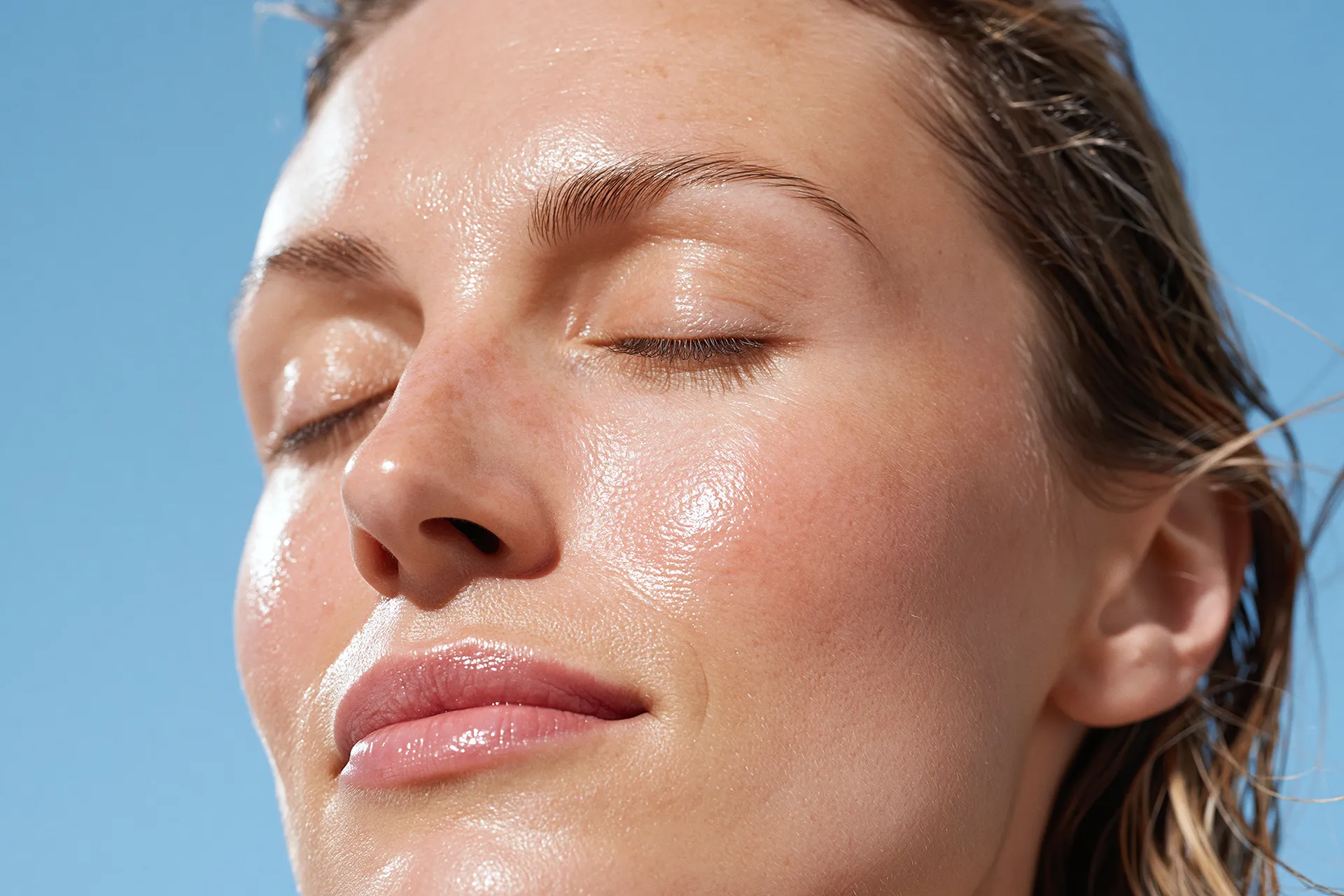
What is oily skin?
Sebum is a natural part of the skin’s defence system. It is a mixture of lipids produced mainly by the sebaceous glands and secreted into the follicles. In normal quantities, sebum helps the skin to retain its elasticity, reduces water loss and plays a part in maintaining the skin barrier.
Problems arise when its production is excessive or when sebum combines with dead skin cells and clogs the pores. The skin may then take on a shiny appearance, feel greasy and become more prone to blackheads and acne.
On the other hand, stripping the skin of oil too aggressively is not a good solution either. Harsh cleansing products can disrupt the skin barrier and cause dryness, irritation and a tight feeling. Therefore, the aim of good skincare is not to remove sebum completely, but to maintain a balance in its production and distribution.
Main signs and symptoms
Oily Skin can look shiny and feel greasy, especially on the forehead, nose and chin. Blackheads or acne may accompany oiliness, but are not inevitable. Persistent redness, itching or flaking can indicate an additional skin condition and should guide assessment.
Patterns of oil production
Sebum itself is not categorised into distinct ‘types’ as if they were separate conditions. The differences observed are primarily related to its composition, quantity and the way it interacts with the skin.
When produced normally, sebum contributes to the skin’s comfort and does not lead to noticeable oiliness.
When sebum production is increased – a condition known as seborrhoea – the skin may appear shiny and greasy, particularly in the T-zone: the forehead, nose and chin. In some people, greasiness is also more pronounced on the scalp.
There is also a combination of increased sebum secretion and impaired sebum release from the follicles. In such cases, the sebum may mix with keratinocytes and contribute to the formation of comedones.
The composition of sebum is also significant. In certain skin conditions, changes in lipids can affect the skin barrier and the microbiome, which is one of the reasons why excessive oiliness is regarded not only as a cosmetic issue, but also as a dermatological one.
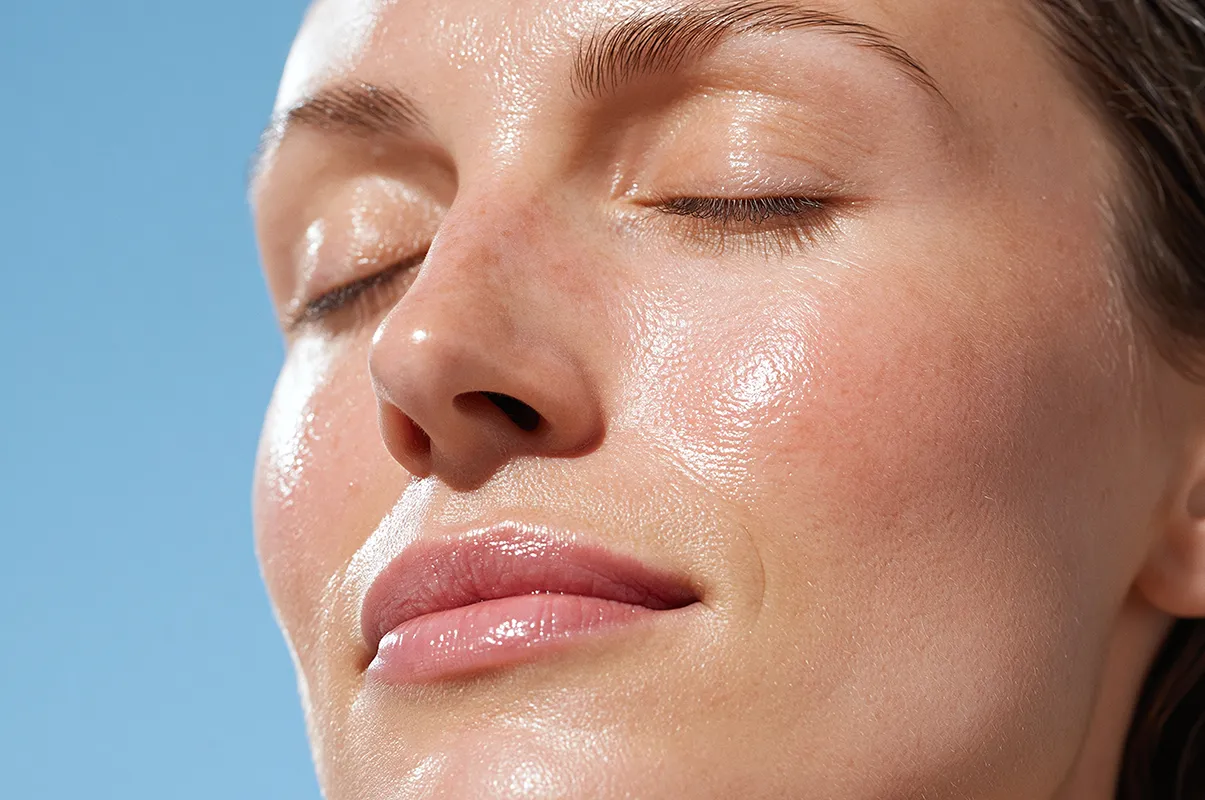
Why does it develop?
Sebum is an oily secretion produced by the sebaceous glands, which are found in the skin and, in most cases, are associated with hair follicles. It contains various lipids, including triglycerides, wax esters, squalene and free fatty acids.
Causes and risk factors
Sebum production is largely regulated by androgenic hormones. This is one of the reasons why oiliness changes throughout different stages of life.
Factors that can increase sebum secretion or make the skin oilier include:
- hormonal changes during puberty;
- individual genetic predisposition;
- increased sensitivity of the sebaceous glands to androgens;
- certain hormonal conditions;
- certain medications;
- a hot and humid climate;
- use of unsuitable cosmetics.
In teenagers, increased oiliness is particularly common due to the hormonal changes during puberty. In adults, a sudden and significant change in oiliness may have various causes and, if necessary, should be assessed by a specialist.
Diet is often blamed as the main cause of oily skin, but the relationship is more complex. In some people, certain dietary factors may play a role in acne, but excessive sebum production cannot be explained solely by the consumption of fatty foods.
Is it a medical condition?
Sebum itself is not a medical condition. It is a normal and necessary product of the sebaceous glands.
Its excessive production does not necessarily constitute a condition in its own right, but may be characteristic of various dermatological conditions. Increased sebum secretion is of particular significance in acne, as sebum is one of the factors involved in the development of acne lesions.
Oily skin may also be present in seborrhoeic dermatitis, in which, in addition to oiliness, there is usually redness and flaking. Typical sites include the scalp, eyebrows, the area around the nose and other areas with a higher concentration of sebaceous glands.
Therefore, not all oily skin needs to be ‘dried out’. Where there is inflammation, comedones, flaking or other symptoms, it is important to establish the cause.
Everyday care
Proper daily care aims to control excess sebum without damaging the skin barrier.
The face should generally be cleansed gently, rather than repeatedly throughout the day. Aggressive scrubbing and the use of strong oil-removing products can lead to dryness and irritation.
For oily or acne-prone skin, products containing ingredients such as the following may be helpful:
- salicylic acid – helps unblock pores and has a keratolytic effect;
- niacinamide – may help regulate sebum production and skin barrier function;
- retinoids – these are used in certain cases of acne and blackheads and should be selected according to the individual’s condition;
- clay masks – these can temporarily absorb some of the surface sebum.
Hydration also remains important. Oily skin can be dehydrated, and using a light, non-comedogenic moisturiser can improve comfort without increasing oiliness.
Sun protection should not be overlooked. A suitable light fluid or gel formula may be more comfortable for oily skin.
Popular home remedies: benefits and limitations
For oily skin, the best at-home approach is consistent and moderate care. It is not necessary to dry the face until it feels tight in order for it to be ‘clean’.
A suitable routine may include a gentle cleanser in the morning and evening, a light moisturiser and daily sun protection. If necessary, active ingredients such as niacinamide or salicylic acid can be gradually introduced.
Popular home remedies such as lemon juice, alcohol, bicarbonate of soda or concentrated vinegar are not a good idea. They can irritate the skin, disrupt its natural pH and damage the skin barrier.
Oil-absorbing facial wipes can be practical for temporarily reducing shine during the day, without having to wash your face again.
Avoid retinoids during pregnancy. Check the suitability of acne products with your clinician if pregnant or breastfeeding.
When should you see a doctor?
Consultation with a dermatologist is recommended when oiliness is severe, newly developed or accompanied by other skin changes.
Seek specialist advice if you have:
- persistent acne and inflamed spots;
- numerous blackheads;
- marked oiliness with redness and flaking;
- itching or a burning sensation on the scalp;
- sudden changes in the skin for no apparent reason;
- ineffectiveness of the products used;
- the appearance of other symptoms suggesting a hormonal problem.
In some people, excessive oiliness may be part of a wider hormonal picture. If additional symptoms are present, the doctor may decide whether further tests are necessary.
It is also important to seek professional help when oily skin has led to the constant use of harsh products. Sometimes it is precisely excessive cleansing that perpetuates irritation and a compromised skin barrier.
Modern treatment options
When home care is not sufficient, a dermatologist may recommend treatment tailored to the specific problem.
For acne and severe seborrhoea, various topical therapies are used, including retinoids, benzoyl peroxide, salicylic acid and other medicinal products depending on the diagnosis.
For selected patients with severe acne, isotretinoin may be considered; it is not routine treatment for ordinary shine. It significantly suppresses the activity of the sebaceous glands. It is a systemic medication with potent effects and serious contraindications and risks; therefore, it is prescribed and monitored exclusively by a doctor.
In aesthetic dermatology, procedures can be used to help control oiliness and improve skin texture. Depending on the condition, chemical peels, certain laser or light-based technologies, and other individually tailored procedures may be discussed.
It is important to distinguish between a temporary reduction in surface sebum and an actual effect on the sebaceous glands. Not every treatment that leaves the skin looking matt immediately after it has been carried out permanently reduces sebum production.
Read the clinical guidance on this concern. Treatment suitability, risks and availability should be discussed during consultation. Find your Skin Line clinic for assessment and personalised advice.