
UNDERSTAND YOUR SKIN
Nasolabial Folds
What are nasolabial folds?
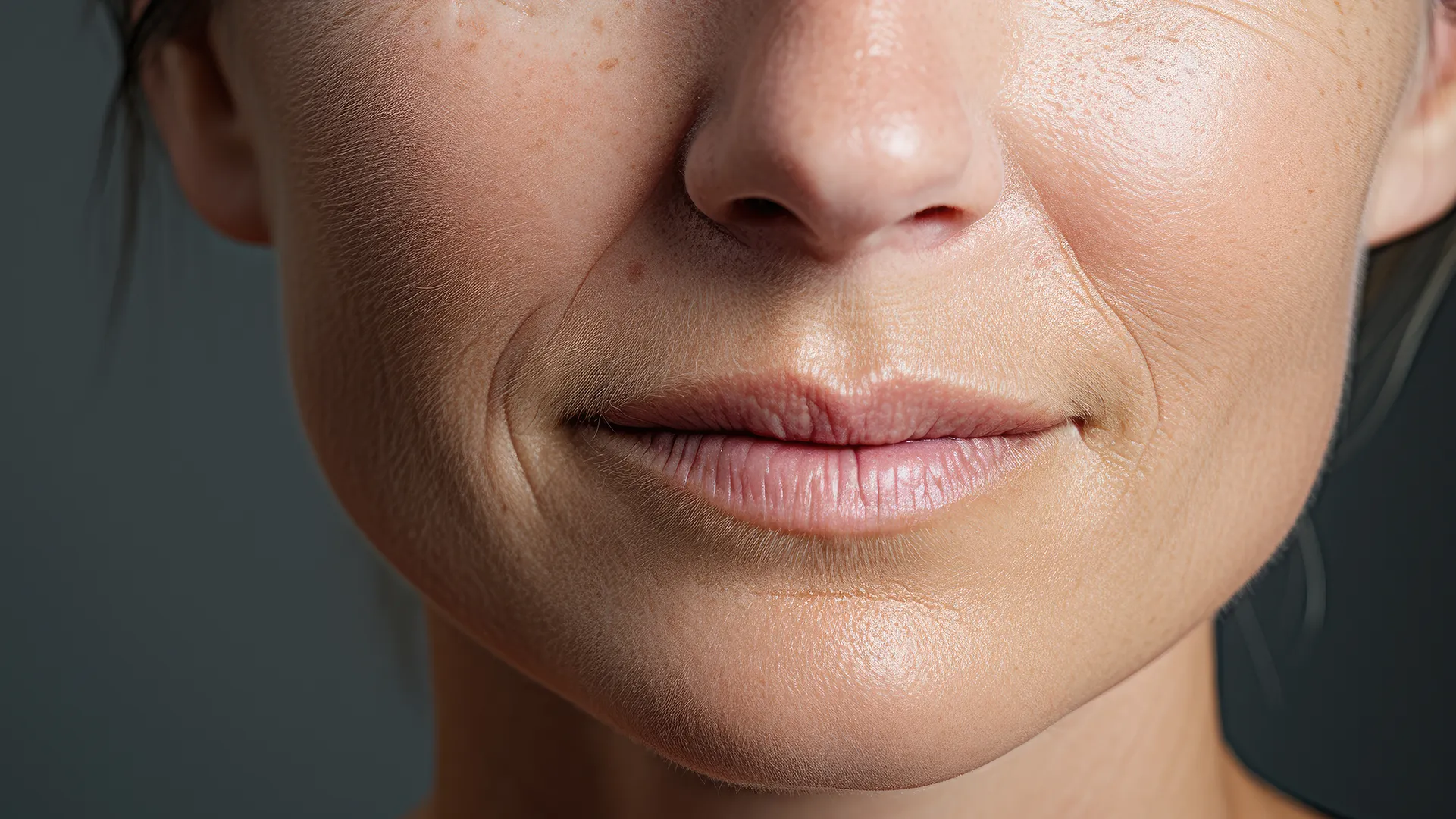
Nasolabial folds are among the most characteristic changes that occur with age. They are creases that extend from the area around the nose to the corners of the mouth and may gradually become more visible. In some people, they are noticeable even at a younger age, whilst in others they deepen gradually as they get older.
The appearance of nasolabial folds is not a sign of illness. It is a natural result of the interaction between skin ageing, changes in the subcutaneous tissues, the loss of collagen and elastin, and changes in the distribution of facial volume. Genetics, sun exposure, smoking and repetitive facial movements can also play a role.
The good news is that modern aesthetic dermatology offers various options for softening nasolabial folds. The approach does not always involve directly ‘filling’ the crease itself. Depending on the cause, treatment may focus on skin quality, volume loss and the overall facial structure.
Main signs and symptoms
Over time, this dynamic crease may gradually become more permanent. The cause is not solely down to the movement of the facial muscles. Changes in the skin and underlying structures are also involved in this process – a reduction in collagen and elastin, changes in fat deposits, loss or redistribution of volume, and changes in bone structure.
This means that the depth of nasolabial folds does not always reflect the skin’s actual ‘age’. In some people, they are genetically more pronounced and are visible even at an early age.
It is important to distinguish between nasolabial folds and other changes around the mouth. For example, marionette lines run down from the corners of the mouth towards the chin, whilst nasolabial folds originate from the area around the nose.
Types and patterns
Nasolabial folds can vary in terms of their depth, visibility and the cause of their formation.
Dynamic nasolabial folds – these are more clearly visible when smiling, speaking and during other facial movements. At rest, they may be barely noticeable.
Static nasolabial folds – these remain visible even when the face is at rest. They are usually associated with more advanced structural changes in the skin and underlying tissues.
Superficial nasolabial lines – these represent milder changes in the skin’s texture and are often associated with the early stages of ageing.
Deep nasolabial folds – these can be clearly defined and give the lower part of the face a more severe or tired appearance.
A single person may have a combination of different characteristics. This is why, when choosing a treatment, the overall anatomy of the face must be assessed, rather than just the line itself.
Why does it develop?
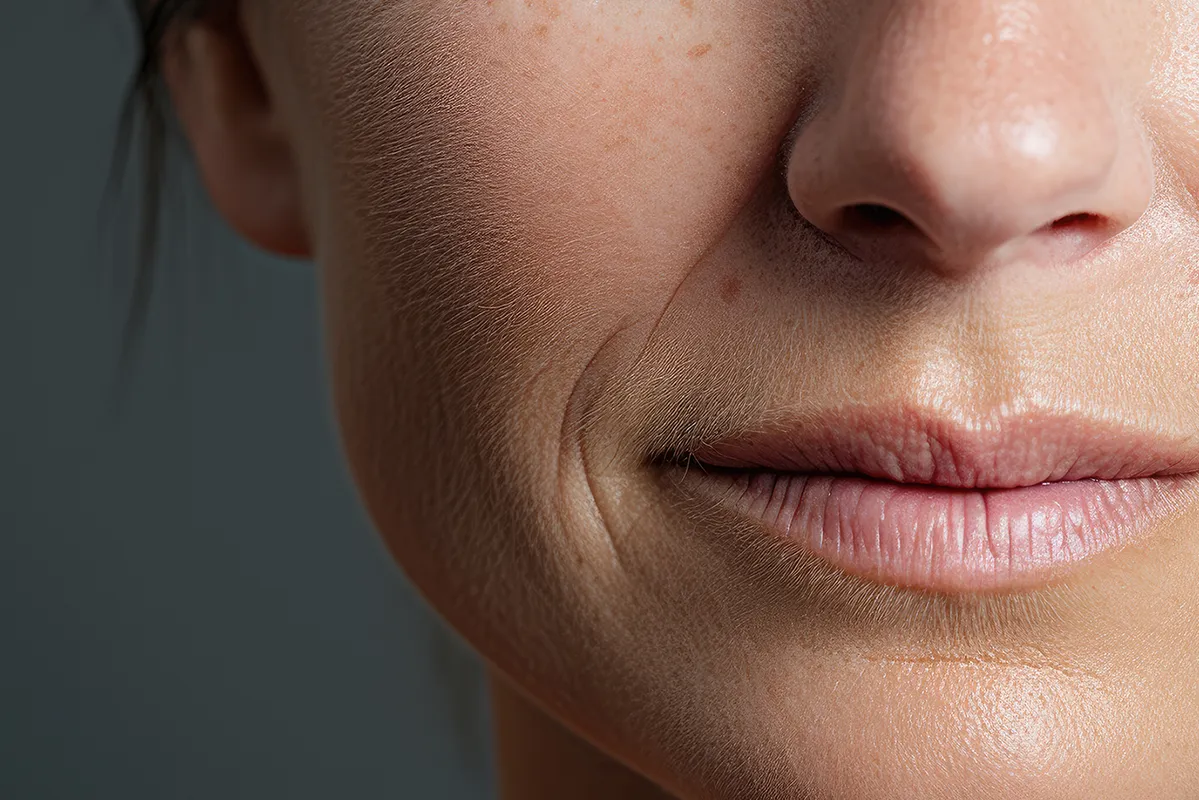
Nasolabial folds are natural anatomical creases that form between the nasal area and the corners of the mouth. They are present to some extent even in young people and usually become more pronounced when smiling or making other facial expressions.
Causes and risk factors
The main cause of the deepening of nasolabial folds is the natural ageing process. Over time, the production of collagen and elastin decreases, the skin loses some of its firmness and elasticity, and the subcutaneous tissues change in volume and position.
The main factors include:
- genetic predisposition;
- natural ageing;
- a reduction in collagen and elastin;
- changes in the facial fat compartments;
- loss of subcutaneous volume;
- prolonged exposure to UV rays;
- smoking;
- significant changes in body weight;
- individual facial expressions and anatomical structure of the face.
Sun exposure is particularly significant for the condition of the skin. UV radiation accelerates the breakdown of collagen and contributes to photoageing.
Weight loss can also make nasolabial folds more visible, particularly when significant. In this case, the cause is not necessarily ‘more wrinkles’, but rather a change in the volume and support of the soft tissues.
In some people, nasolabial folds are clearly visible even at a young age due to genetic and anatomical characteristics. This is a completely normal individual trait.
Is it a medical condition?
Nasolabial folds are not a medical condition. They are a normal anatomical feature that becomes more visible with advancing age and changes in facial structure.
Their presence does not mean that the skin is damaged or that there is a health problem. The desire to reduce them is usually for aesthetic reasons.
It is important to bear in mind, however, that a sudden change in facial symmetry or sudden sagging on one side of the face should not simply be dismissed as a ‘wrinkle’. Such symptoms require medical assessment.
Everyday care
Home skincare cannot completely eliminate nasolabial folds that have already formed, but it can help keep the skin in good condition and slow down some signs of photoageing.
The foundation is daily sun protection. Using a broad-spectrum sunscreen with a high SPF limits UV damage, which is one of the main external factors contributing to premature ageing.
A suitable routine may include:
- moisturising products to maintain the skin barrier;
- retinoids or retinol, where suitable for the individual’s skin;
- vitamin C as an antioxidant treatment;
- peptides and other ingredients designed to support skin structure;
- gentle cleansing without excessive drying.
Retinoids can stimulate skin renewal and support collagen production, but should be introduced gradually. In the event of irritation, pregnancy or other specific circumstances, it is essential to follow a dermatologist’s advice.
Popular home remedies: benefits and limitations
There is no home remedy that can eliminate an anatomically formed nasolabial fold. Massages, facial exercises and various home remedies may create a temporary sensation of improved tone or enhance hydration, but there is no reliable evidence that they can erase deep nasolabial wrinkles.
The most effective home strategy is consistent skincare. This includes daily sun protection, adequate hydration and suitable active ingredients.
It is not advisable to use harsh home peels, concentrated acids or other products with the aim of ‘smoothing out’ the lines. Irritation and inflammation can damage the skin barrier and worsen the overall condition of the skin.
Do not use retinoids during pregnancy; ask your clinician about suitable alternatives.
When should you see a doctor?
Sudden facial drooping, arm weakness or difficulty speaking can signal a stroke. Call 112 immediately in Bulgaria, even if symptoms improve. Do not wait for a cosmetic consultation.
Medical treatment is not necessary for normal nasolabial folds. Consulting a dermatologist or a specialist in aesthetic medicine is advisable if you wish to improve their appearance and obtain a professional assessment.
It is particularly important to consult a specialist if:
- the lines have deepened significantly over a short period;
- there is sudden facial asymmetry;
- the skin in the area has undergone an unusual change in texture;
- you have other accompanying symptoms;
- you are considering an injection or non-surgical procedure;
- you are unsure which method would be suitable for your face shape.
During the consultation, the specialist assesses not only the nasolabial folds but also the overall structure of the face. This is important because sometimes the crease appears deeper due to a loss of volume in the mid-face area, rather than solely because of changes in the skin itself.
Modern treatment options
Modern aesthetic dermatology offers various methods for reducing the visibility of nasolabial folds. The choice depends on age, skin quality, the depth of the folds and anatomical characteristics.
Hyaluronic acid dermal fillers can be used in suitable patients to restore volume and soften nasolabial folds. It is important that the procedure is carried out by a qualified healthcare professional, as injection procedures carry potential complications.
In some cases, it is more appropriate to restore lost volume in the mid-face area rather than injecting a large amount of product directly into the nasolabial fold itself. This can achieve a more harmonious result.
Radiofrequency treatments can stimulate collagen remodelling and improve skin firmness and texture. They are particularly suitable when the main issue is reduced skin elasticity.
Microneedling and radiofrequency microneedling can also be used to improve skin quality and stimulate remodelling processes.
Laser treatments may be suitable for certain patients to improve skin texture and the signs of photoageing.
In cases of more pronounced sagging of the facial tissues, other medical or surgical approaches may be considered. However, not every nasolabial fold requires aggressive correction.
Read the clinical guidance on this concern. Treatment suitability, risks and availability should be discussed during consultation. Find your Skin Line clinic for assessment and personalised advice.
Fillers can cause swelling, bruising and infection. Rare injection into a blood vessel can cause tissue damage, blindness or stroke. Energy-based procedures also have risks, including burns and pigment changes, and cannot reliably replace lost facial volume.