
UNDERSTAND YOUR SKIN
Melasma

What is melasma?
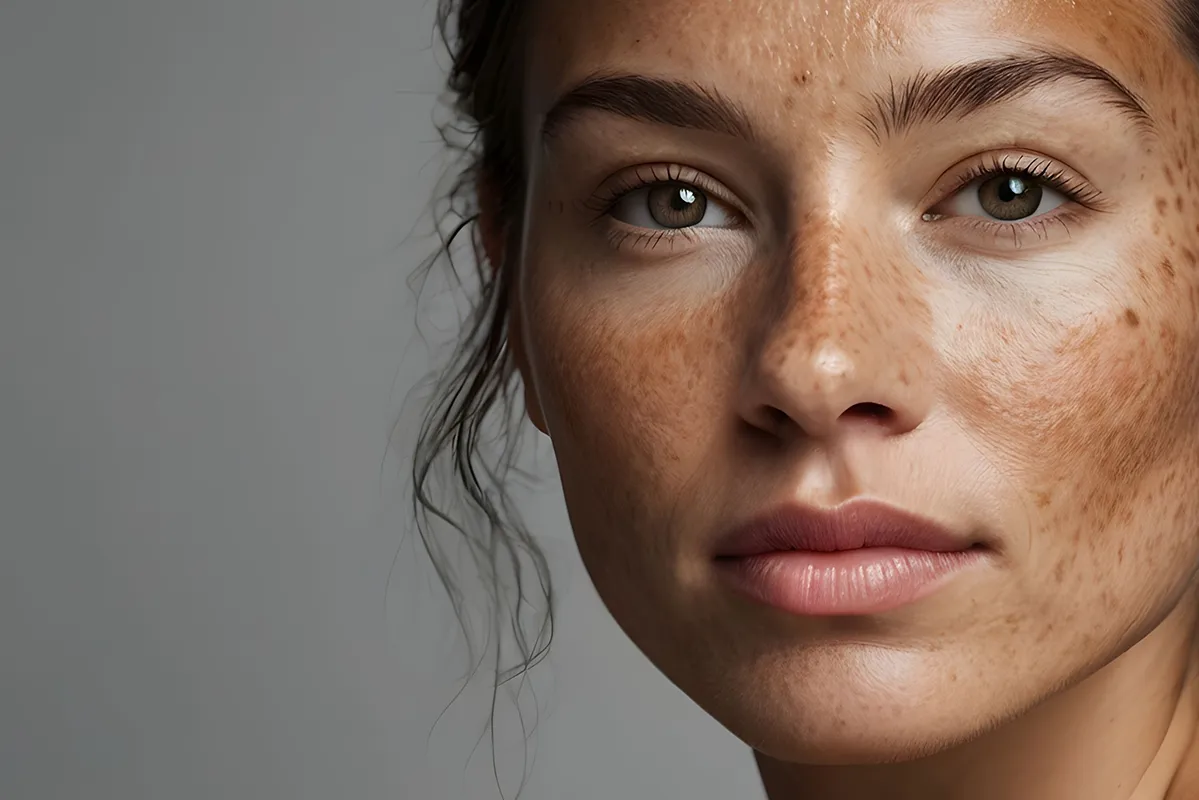
Melasma is a common pigmentation disorder characterised by the appearance of darker, brownish patches on the skin. It most commonly affects the face and other areas exposed to the sun. Melasma is not harmful to health and is not contagious, but it can be persistent and have a significant impact on self-esteem.
The condition is more common in women, particularly those of reproductive age, but it can also occur in men. Hormonal changes, exposure to ultraviolet and visible light, genetic predisposition and certain medications may play a role in the development or worsening of melasma.
The good news is that modern dermatology offers a range of options for managing melasma. The best results are usually achieved through a combination of strict sun protection, appropriate home care and professionally selected treatment.
Main signs and symptoms
The cause is increased activity of the melanocytes – the cells that produce melanin. In melasma, these cells can produce an excessive amount of pigment, which accumulates in various layers of the skin.
A characteristic feature of melasma is that the patches are usually symmetrical and non-inflammatory. They do not cause pain, but may gradually become more visible, particularly in spring and summer.
Melasma is a chronic and recurrent condition. This means that even after successful lightening, the patches may reappear if there is insufficient sun protection or if triggering factors are present again.
Types and patterns
Melasma can be classified according to the depth of the pigment in the skin and according to the areas affected.
Epidermal melasma – the pigment is located predominantly in the epidermis. The patches are usually brown and, under suitable lighting and following a dermatological assessment, can be more easily distinguished.
Dermal melasma – the melanin pigment is found in the deeper layers of the skin. The patches may have a more greyish-bluish tinge and are usually more difficult to treat.
Mixed melasma – pigment is present in both the epidermis and the dermis. This is a common variant.
Several characteristic patterns are described based on their location:
- Centrofacial – affects the forehead, cheeks, nose, upper lip and chin.
- Malar – concentrated mainly in the area of the cheeks and nose.
- Mandibular – affects the lower jaw area.
These subtypes may overlap, and determining the type helps in selecting an appropriate approach.
Why does it develop?
Melasma is an acquired pigmentation disorder characterised by the formation of symmetrical brown or grey-brown patches. These most commonly appear on the cheeks, forehead, nose, above the upper lip and on the chin.
Causes and risk factors
There is no single specific cause of melasma. It is thought to develop as a result of an interaction between genetic predisposition, hormonal factors and exposure to light.
One of the most important triggering factors is ultraviolet radiation. UV rays stimulate melanin production and can worsen existing melasma.
Visible light may also play a role, particularly in people with darker skin types. For this reason, broad-spectrum sun protection is often recommended for melasma, which should provide protection and, where appropriate, include tinted sunscreens containing iron oxides.
Other factors include:
- genetic predisposition;
- pregnancy;
- use of certain hormonal contraceptives;
- hormone therapies;
- certain medicines;
- certain cosmetic products or procedures that cause irritation;
- heat and prolonged exposure to the sun.
During pregnancy, melasma is often referred to as the ‘pregnancy mask’. Hormonal changes can stimulate melanocytes, whilst exposure to the sun further intensifies pigmentation.
It is important to emphasise that melasma is not the result of poor hygiene and does not mean that a person is not looking after their skin properly.
Is it a medical condition?
Melasma is a medical condition of the skin associated with a pigmentation disorder, but it is not a dangerous condition and is not contagious.
It does not develop into cancer and does not in itself pose a threat to life. The main concern is aesthetic, as well as the tendency for recurrence.
Sometimes other pigmentary conditions may resemble melasma. Therefore, in the case of atypical patches, unilateral pigmentation or changes that do not fit the typical pattern, it is important to undergo a dermatological examination.
Melasma can be stubborn, but the right combination of prevention and treatment allows many patients to achieve significant lightening of the patches.
Everyday care
Home care is one of the most important aspects of managing melasma. Even the most effective treatment may have limited results if the skin continues to be exposed to strong UV and visible light.
Sun protection is the cornerstone of skincare. Daily use of a broad-spectrum sunscreen with a high SPF is recommended, and protection should be reapplied during prolonged outdoor exposure.
For melasma, a tinted sun protection product containing iron oxides may be particularly beneficial, as these can provide additional protection against visible light.
Your home skincare routine should be gentle. Aggressive exfoliation, vigorous rubbing and products that cause a stinging sensation or inflammation can worsen pigmentation.
Appropriate skincare may include active ingredients selected according to individual needs:
- vitamin C;
- niacinamide;
- azelaic acid;
- tranexamic acid for topical use;
- retinoids as recommended by a doctor;
- other dermatologically proven depigmenting ingredients.
It is not necessary to use all active ingredients simultaneously. Over-stimulation of the skin can cause irritation and lead to post-inflammatory hyperpigmentation.
Popular home remedies: benefits and limitations
For melasma, home care must be careful and consistent. The most important ‘home remedy’ is, in fact, daily sun protection.
Dermatologically formulated products containing proven ingredients for controlling hyperpigmentation may be used. Adequate hydration is also important, as a healthy skin barrier tolerates active products better.
It is not advisable to use popular home remedies containing lemon juice, bicarbonate of soda, vinegar or concentrated essential oils. These can cause irritation or a burning sensation, and the resulting inflammation may exacerbate the pigmentation.
Melasma requires patience. The spots do not usually lighten within a few days, and the tendency for them to reappear means that sun protection must remain part of your daily skincare routine even after visible improvement. With a correct diagnosis and a personalised treatment plan, melasma can be effectively managed. The most important thing is for treatment to be gradual, gentle and tailored to the specific characteristics of the skin, rather than relying on aggressive methods that can lead to further inflammation and additional pigmentation.
Avoid retinoids during pregnancy. Do not stop prescribed hormonal treatment or contraception without discussing alternatives with your clinician.
When should you see a doctor?
If new pigmented patches appear on the face, it is advisable to consult a dermatologist, particularly if the cause is unclear.
A specialist should be consulted when:
- the patches appear suddenly or spread rapidly;
- the pigmentation is on only one side of the face;
- an individual patch is irregular in shape or uneven in colour;
- there is itching, pain, bleeding or ulceration;
- home care does not lead to improvement;
- the pigmentation appears after taking a medication;
- there is a suspicion that the patches are not typical melasma.
A dermatologist can make a diagnosis based on a clinical examination and, if necessary, use dermoscopy or other methods to assess the pigmentation.
An accurate diagnosis is particularly important because not every brown patch on the face is melasma. The differential diagnosis may include post-inflammatory hyperpigmentation, sunspots and other pigmented lesions.
Modern treatment options
Treatment for melasma must be personalised and take into account the skin type, the depth of pigmentation and the causes of its exacerbation.
One of the main approaches is the use of topical depigmenting agents. Hydroquinone is a well-studied ingredient for the treatment of melasma and, depending on legislation and the specific country, is used at the doctor’s discretion. It is often applied for a limited period and under the supervision of a dermatologist.
In suitable patients, chemical peels using controlled concentrations of active ingredients may be considered. These must be selected carefully, as excessive irritation can lead to further pigmentation.
Certain laser and light-based treatments may be used for melasma, but they must be administered with great care. Incorrectly selected parameters or excessive thermal exposure may worsen the condition.
For some patients, the doctor may also discuss systemic tranexamic acid, but it is not suitable for everyone. Due to potential contraindications and the risk of thrombotic complications, it should only be used following a careful medical assessment.
Read the clinical guidance on this concern. Treatment suitability, risks and availability should be discussed during consultation. Find your Skin Line clinic for assessment and personalised advice.